
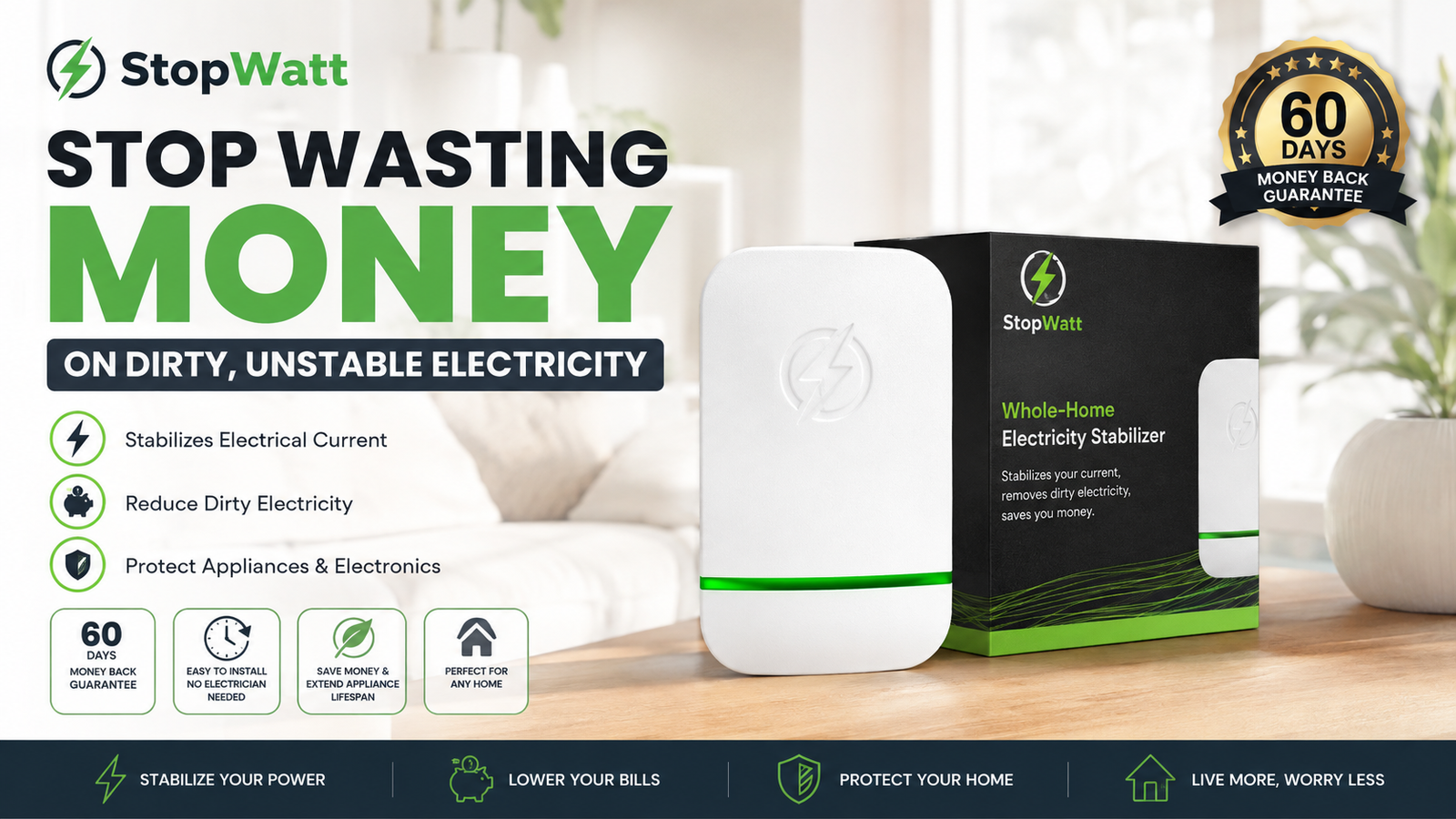
If you've seen ads for StopWatt promising to cut your electric bill, you're probably asking the same question most shoppers ask before they buy: is this a real energy saving device, or just another gadget riding the "smart home electricity" trend? This review breaks down what StopWatt is, how the seller says it works, what can and can't be verified, and what to check before you add it to your shopping cart.
What Is StopWatt?
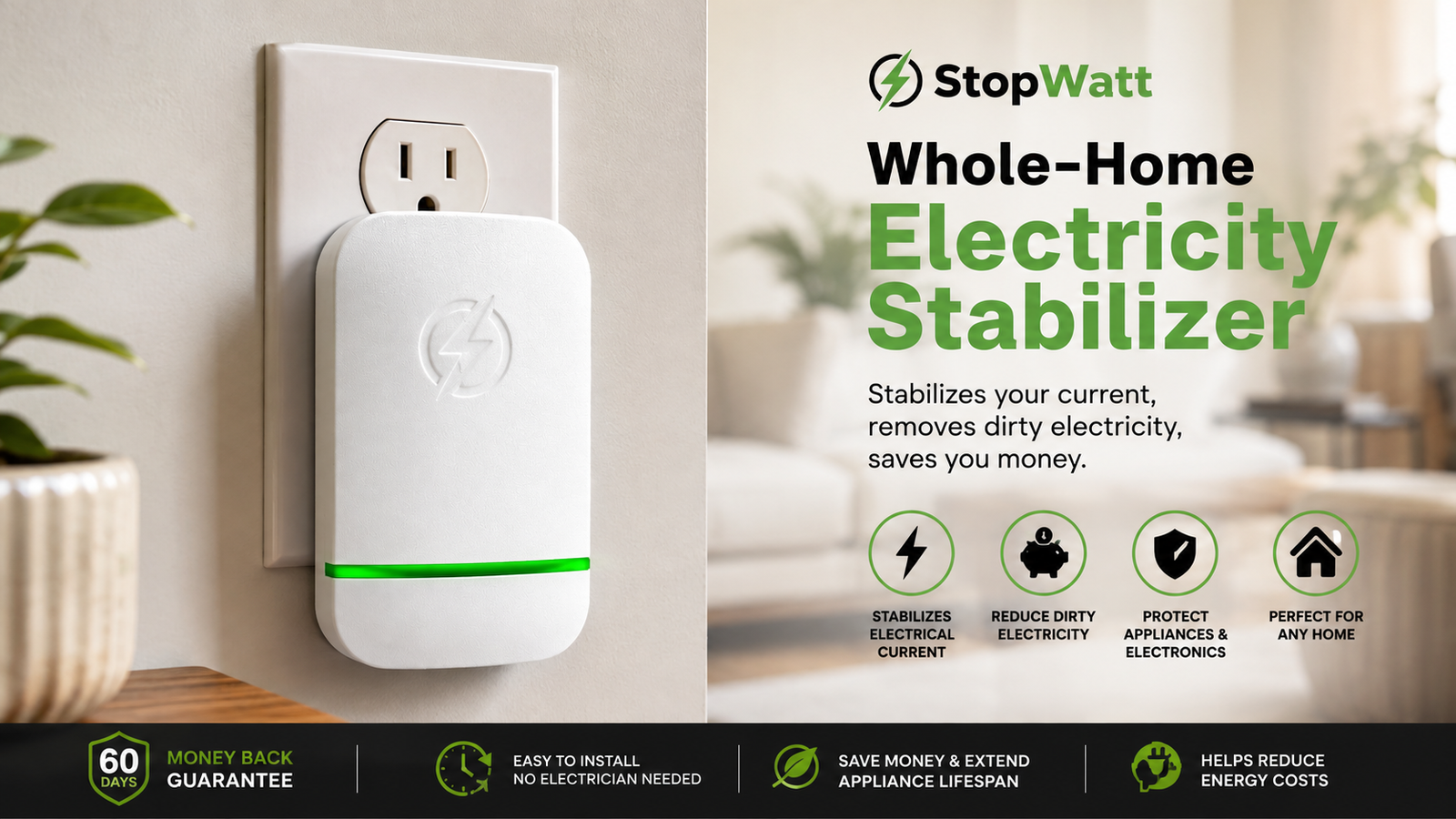
Marketed under names like "StopWatt" or the "stop watt energy saving device," this is a compact plug-in unit positioned as a power saver and power-conditioning product for home use. The idea behind it is simple: plug the device into any standard wall outlet, and it's meant to work passively in the background — no app, no wiring, no setup beyond finding an open socket.
The seller positions StopWatt as a device for home use that addresses three common concerns:
- Reducing unnecessary power waste from idle appliances
- Helping stabilize voltage and smooth out power spikes
- Making appliances run more efficiently over time
Those are the claims. Whether every one of them applies to this specific product is something buyers should verify independently rather than assume.
How Is StopWatt Designed to Work?
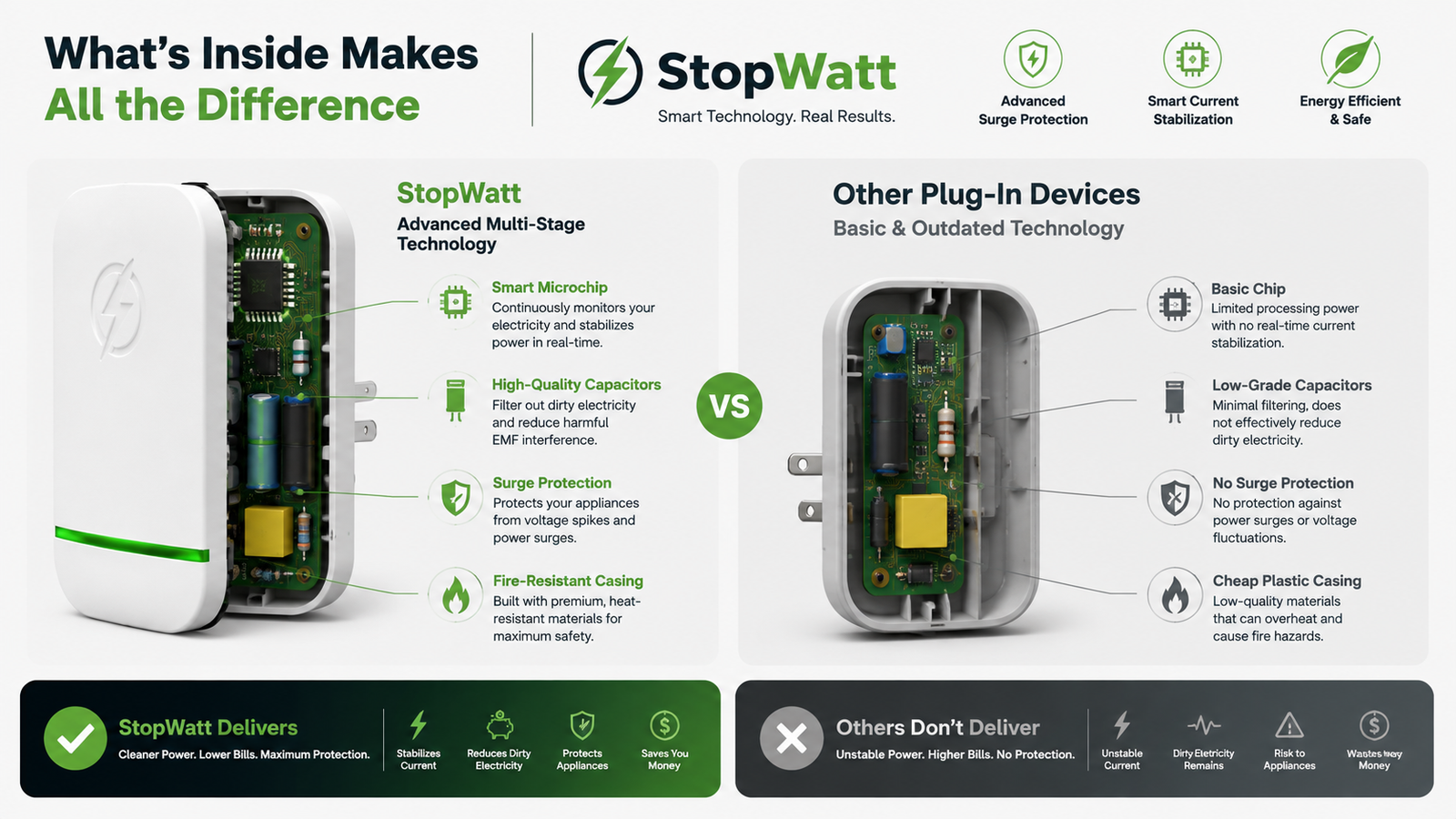
According to the promotional material, StopWatt is built around the concept of power factor correction and voltage stabilization. In plain terms, homes don't always draw electricity in a perfectly efficient way — appliances with motors or transformers can create "noise" on the line, sometimes called dirty electricity. Devices in this category claim to act as a filter or voltage stabilizer that helps balance current flow and reduce that noise.
StopWatt (sometimes searched as "stop watt") is designed to plug directly into a wall outlet — commonly listed as a us plug 90v-250v 30kw unit — and stay there continuously. There's no ongoing use required — you plug it in and leave it.
It's worth separating the concept from the product. Power conditioning and power factor correction are established electrical engineering ideas. That doesn't automatically mean any single plug-in device — StopWatt included — delivers a measurable result in an average household without independent lab testing to confirm it.
Does StopWatt Really Save Electricity?
This is the question most people searching for a StopWatt review actually want answered, so let's be direct: there is no independently verified data confirming that StopWatt lowers a household's electric bill by a specific amount.
To evaluate any energy saving device fairly, it helps to separate three different questions:
- Does the device power on and function as a plug-in unit?
- Does it measurably affect voltage, current, or power factor in a home?
- Does that translate into a lower electric bill at the end of the month?
The first is easy to confirm. The second requires proper electrical testing equipment. The third depends on far more than any single plug-in product — your appliances, your rates, your home's size, your HVAC use, and your daily habits all affect your electricity costs. A device that claims to reduce electricity use should not be assumed to create guaranteed savings without third-party measurement.
If you're comparing StopWatt to a device like StopWatt from a competing brand, the same rule applies: look for actual test data, not just marketing language.
Is StopWatt a Scam? Addressing the "Fake" and "Fraudulent" Questions
A lot of shoppers search "StopWatt scam" or wonder if this kind of energy saving device is fraudulent before they buy. Here's a fair way to look at it:
- The product itself appears to be a real, actively sold item. There's a functioning seller checkout, product photography, and a listed offer — that supports the conclusion that this isn't a fake listing with no product behind it.
- That does not verify every marketing claim. A real product can still be sold with exaggerated language. The word "miracle" or promises of automatic savings are marketing phrasing, not evidence.
- Watch for common red flags regardless of brand: unverifiable percentage savings, no technical specifications, pressure-driven countdown timers, and vague or missing certification details.
Being skeptical of bold savings claims doesn't mean the product is fraudulent — it means you're doing normal due diligence before checkout.
What's in the Box
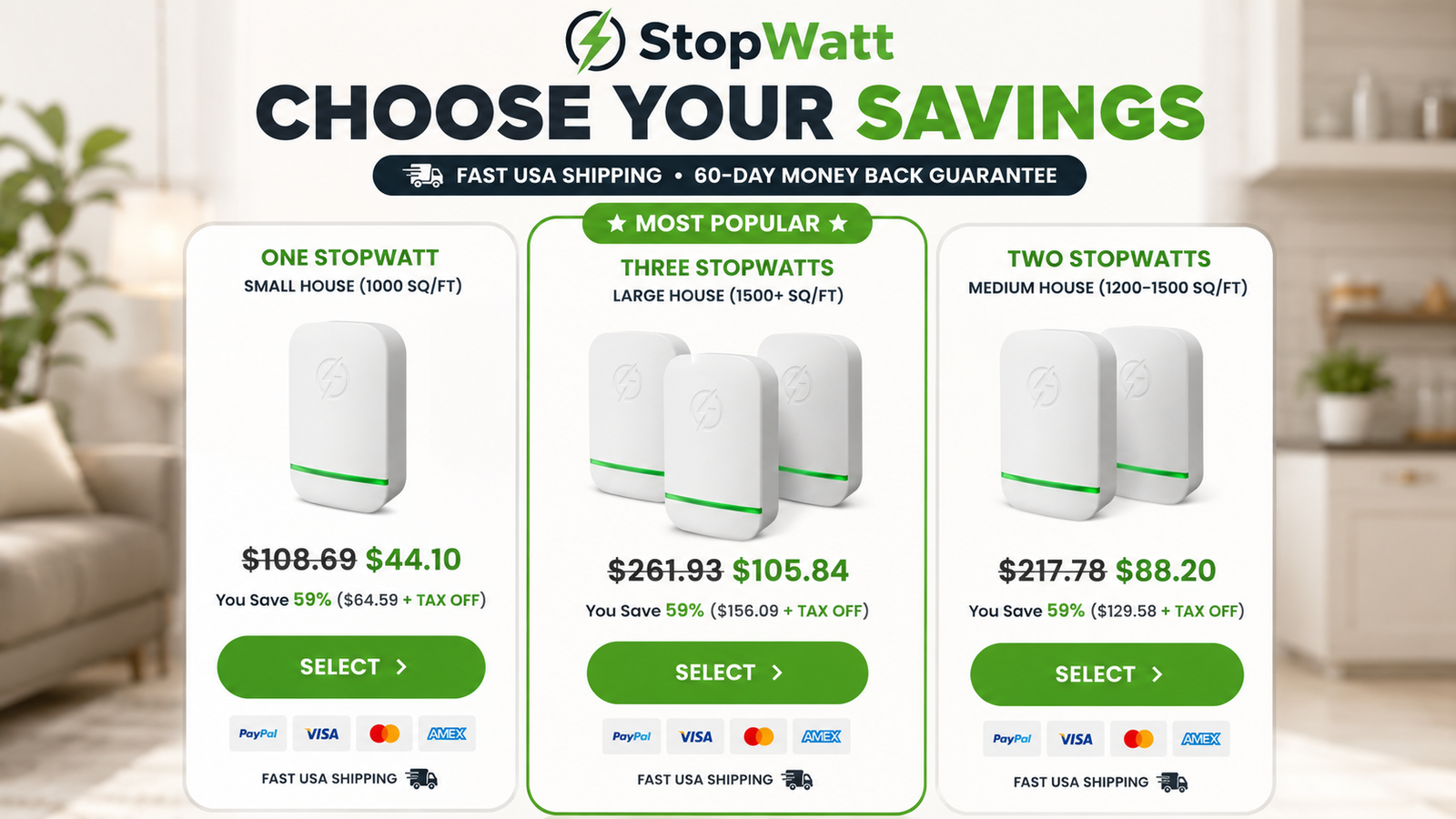
Based on available seller listings, StopWatt typically ships as a single compact unit with a white plastic housing and a green indicator light on the front. Some sellers offer bundle pricing — commonly seen as a 4 pack option — for buyers who want to cover multiple rooms or outlets in the household. This device us plug design means each user simply needs an open wall socket; no wiring or professional install is involved.
Pricing can vary during a promotional sale, so confirm the current box contents, unit count, and any "Pro" version differences directly on the seller's product page before you complete your order, since offers can change.
StopWatt Pros and Cons
Pros
- Simple plug-in device — no installation or wiring required
- Compact size fits any standard wall outlet
- Easy concept to understand for non-technical buyers
- Bundle/multi-pack options available for larger households
Cons
- No independently verified bill-reduction data
- Limited published technical specifications
- EMF reduction and appliance-protection claims aren't independently certified
- Not a substitute for a certified surge protector or a qualified electrician.
Efficiency Claims vs. a Certified Voltage Regulator
It's worth noting the difference between a marketed efficiency device and a certified voltage regulator. A regulator is a professionally rated piece of equipment designed and certified to control voltage within strict tolerances — typically installed or specified by an electrician. A small plug-in unit marketed around efficiency claims is not automatically equivalent to that kind of certified hardware, even if the two concepts sound similar.
Safety Considerations Before You Use a Plug-In Power Device
Regardless of brand, plug-in electrical devices come with a few common-sense safety rules:
- Only use the device in an undamaged, properly grounded outlet.
- Don't use a unit that looks cracked, burnt, or otherwise damaged.
- Unplug immediately if you notice overheating, unusual smells, or sparking.
- If you have frequent breaker trips, flickering lights, or other wiring issues, contact a licensed electrician — a plug-in device is not a substitute for professional electrical diagnosis.
What Customers Are Saying
Reviews and comments on retailer pages, Facebook groups, and shopping forums are mixed, which is typical for this product category. Some buyers report noticing appliances "feel" more stable, while others report no noticeable difference in their electric bill. Because self-reported comments aren't controlled measurements, treat them as anecdotal rather than proof of performance. If a report or customer comment references an exact percentage saved, remember that home energy use has too many variables for one household's experience to guarantee the same result in yours.
StopWatt FAQ
StopWatt is a plug-in electrical device marketed as an energy saving and power-conditioning product for home use.
The seller describes it as a device that plugs into a wall outlet and is associated with power factor correction, voltage stabilization, and dirty electricity filtering. The exact internal components should be confirmed against current product documentation.
There's no independently verified guarantee that StopWatt will reduce your specific electric bill. Real savings depend on your appliances, rates, and usage habits.
Availability varies by retailer and changes over time. Always confirm you're ordering from an authorized listing and check the current price, return policy, and seller ratings before buying.
Whole-home voltage stabilization is typically a job for a licensed electrician using certified equipment. A single small plug-in unit shouldn't be assumed to cover an entire household's electrical system.
Where a guarantee is currently listed by the seller, conditions and return windows may apply. Confirm the current terms at checkout, since promotional pages can change.
Used as instructed in an undamaged outlet, plug-in devices of this type are generally low-risk, but stop use immediately if you notice overheating, odd smells, or sparking, and consult an electrician for underlying wiring issues.
Final Verdict
StopWatt may appeal to buyers who are curious about plug-in power savers and want a low-effort product to try — plug it into the wall and see how it feels in daily use. What it should not be treated as is a guaranteed fix for high electric bills or a certified replacement for surge protection and professional electrical work. Before you order, check the current product version, voltage compatibility, return terms, and total cost at checkout so there are no surprises.